Cloud Computing
About Course
Cloud Computing: The Backbone of Modern Digital Infrastructure
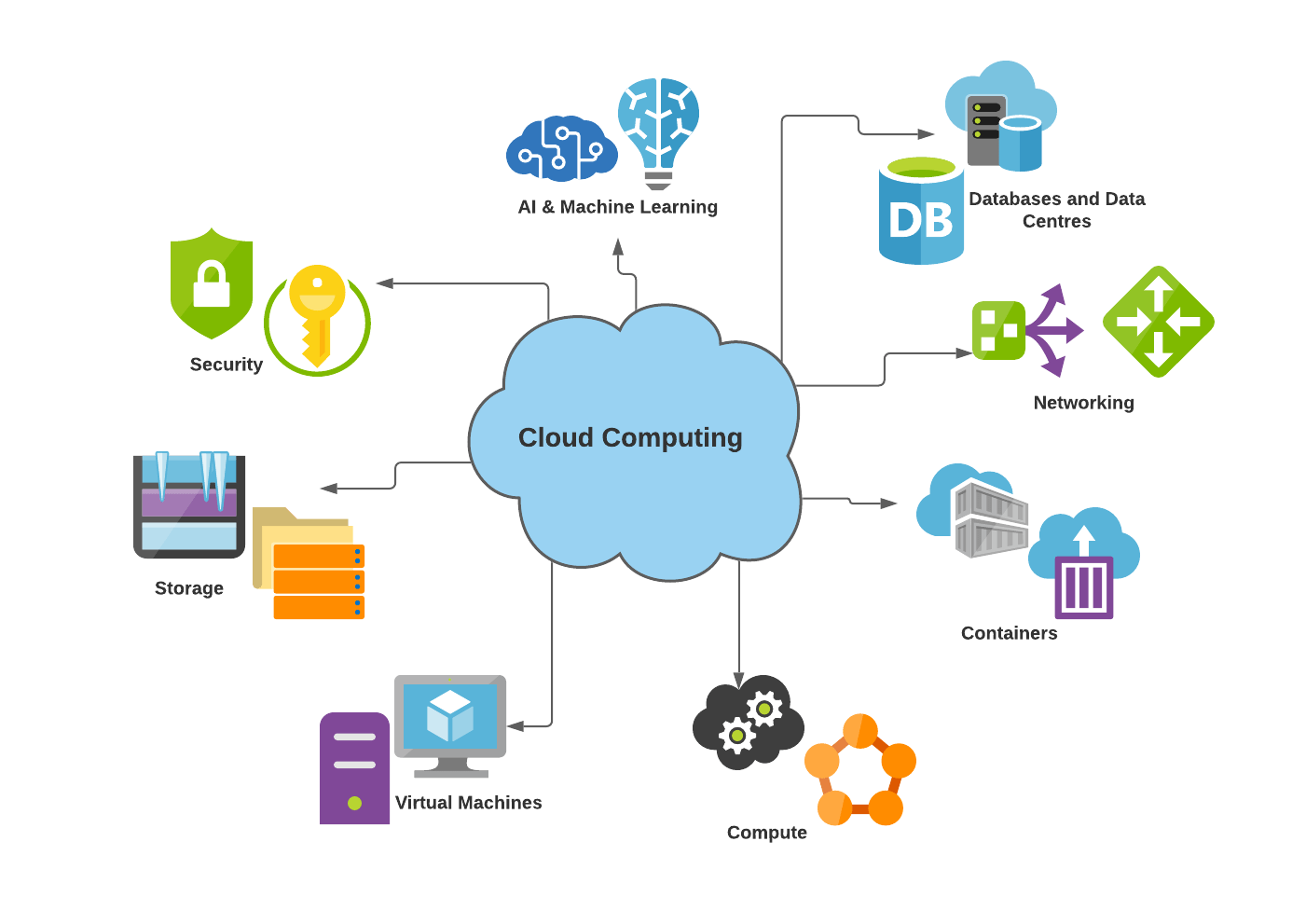
Cloud computing has revolutionized the way businesses build, deploy, and scale technology. Instead of owning physical data centers and servers, companies rent computing resources on-demand—paying only for what they use, exactly like electricity or water. This shift has transformed IT from a capital-intensive expense into a flexible, agile engine of innovation.
📌 What Cloud Computing truly is:
· On-Demand Self-Service – Provision servers, storage, databases, and networking resources in minutes with just a few clicks or API calls, without any human interaction with service providers.
· Broad Network Access – Access your applications and data from anywhere in the world, using any device—laptops, smartphones, or tablets—over the internet.
· Resource Pooling – Providers like AWS, Azure, and Google Cloud pool massive computing resources to serve multiple customers dynamically, optimizing utilization and driving down costs.
· Rapid Elasticity – Scale resources up during traffic spikes and down during lulls. Cloud grows with your business, ensuring you never overpay for idle capacity.
· Measured Service – Pay-per-use pricing with granular monitoring means you track exactly how much compute, storage, and bandwidth you consume.
📚 The Three Core Service Models:
· IaaS (Infrastructure as a Service) – Raw computing power: virtual machines, storage, and networks. Full control for IT admins.
· PaaS (Platform as a Service) – Managed platforms for developers to build and deploy applications without worrying about underlying servers.
· SaaS (Software as a Service) – Ready-to-use applications delivered over the internet—like Gmail, Dropbox, or Salesforce.
💡 Why Cloud Computing matters:
· Cost Efficiency – Eliminate huge upfront hardware investments. Shift from capital expenditure (CapEx) to operational expenditure (OpEx).
· Global Reach – Deploy applications in data centers across the world, delivering low-latency experiences to users wherever they are.
· Disaster Recovery & Reliability – Built-in redundancy, automated backups, and multi-region failover ensure your systems stay online.
· Innovation Acceleration – Access cutting-edge technologies like AI/ML, big data analytics, IoT, and serverless computing without building them from scratch.
👨💻 Who this is for:
· IT professionals transitioning from on-premise to cloud infrastructure.
· Developers who want to deploy and scale their applications reliably.
· System administrators and DevOps engineers modernizing their workflows.
· Business leaders and entrepreneurs looking to reduce costs and increase agility.
🎯 What you will achieve:
By understanding cloud computing, you unlock the ability to design resilient, scalable, and cost-optimized systems. You move from managing hardware to orchestrating services—thinking in terms of architecture, automation, and global availability. In today’s digital-first world, cloud literacy isn’t just a technical skill; it’s a strategic advantage that empowers you to build bigger, move faster, and compete globally.
Student Ratings & Reviews